🇮🇹 Questo capitolo è disponibile in italiano e in inglese. Prima leggerai la versione italiana, subito dopo troverai la traduzione inglese.
🇬🇧 This chapter is available in both Italian and English. You will first read the Italian version, followed by the English translation.
Liverpool era stata la palestra. Ma fu ad Amburgo che i Beatles diventarono davvero una band.
Nella città portuale tedesca, tra i locali fumosi di St. Pauli e le notti senza fine della Reeperbahn, impararono cosa significava vivere di musica.
1. Il viaggio verso l’ignoto
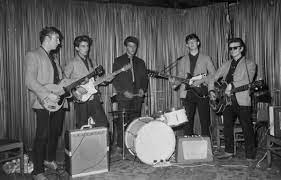
Nell’agosto del 1960, John Lennon, Paul McCartney, George Harrison, Stuart Sutcliffe e Pete Best lasciarono l’Inghilterra per la Germania.
Non avevano contratti milionari né tournée organizzate: solo un ingaggio nei club del quartiere a luci rosse, ottenuto grazie all’intraprendenza di Allan Williams, il loro primo manager.
Il viaggio stesso era un salto nel buio. Ragazzi poco più che adolescenti si ritrovarono catapultati in un mondo adulto, duro e senza regole, fatto di notti lunghe, pubblico esigente e musica a tutto volume.
2. Le notti infinite di Amburgo
Ad Amburgo non c’era spazio per dilettanti. Nei club come l’Indra, il Kaiserkeller e lo Star-Club, le band dovevano suonare fino a 6-7 ore di fila.
Il pubblico era rumoroso, disordinato, spesso fatto di marinai, nottambuli e lavoratori del porto. Non era lì per ascoltare con attenzione: voleva ballare, bere, gridare.
Per i Beatles fu un addestramento durissimo ma decisivo: impararono a resistere, a non mollare, a tenere il palco anche quando le corde saltavano o la voce si spegneva. Fu lì che affinarono velocità, resistenza e coesione.
Ecco alcuni dei brani che incendiavano le notti di Amburgo:
🎶 Long Tall Sally (Little Richard)
🎶 What’d I Say (Ray Charles)
Un brano infinito, fatto di improvvisazione, call-and-response e ritmo ipnotico: perfetto per riempire le notti. <div style=”text-align: center; margin: 20px 0;”> </div>
🎶 Twist and Shout (Isley Brothers)
John lo urlava fino a consumarsi la voce: una cover che sarebbe rimasta nel loro repertorio fino agli anni della Beatlemania. <div style=”text-align: center; margin: 20px 0;”> </div>
🎶 Johnny B. Goode (Chuck Berry)
George Harrison si misurava con gli assoli veloci di Berry, veri esercizi di virtuosismo rock’n’roll. <div style=”text-align: center; margin: 20px 0;”> </div>
🎶 Peggy Sue (Buddy Holly)
Il modello più amato, quello che ispirò non solo il suono ma anche lo stile della band. <div style=”text-align: center; margin: 20px 0;”> </div>
🎶 Roll Over Beethoven (Chuck Berry)
Un altro pezzo amatissimo: ritmo contagioso, chitarra esplosiva, energia senza tregua. <div style=”text-align: center; margin: 20px 0;”> </div>
3. Incontri e trasformazioni
Ad Amburgo accaddero incontri decisivi, capaci di cambiare per sempre la storia dei Beatles.
Astrid Kirchherr non fu soltanto la fotografa che li immortalò in quegli anni. Fu la prima a vedere in quei ragazzi non dei semplici musicisti da club, ma personalità da raccontare. Le sue foto in bianco e nero, scattate tra le strade di Amburgo e le stanze degli amici, restano tra le più autentiche testimonianze della loro giovinezza ribelle. Fu lei a proporre il celebre taglio di capelli “a scodella”, ispirato alla moda esistenzialista francese: un dettaglio che, pochi anni dopo, sarebbe diventato un simbolo planetario.
Klaus Voormann, giovane artista tedesco, li scoprì quasi per caso, affascinato dal suono che usciva da un club sulla Reeperbahn. Rimase così colpito da seguirli per settimane, diventando amico intimo della band. Quel ragazzo silenzioso e osservatore, che anni dopo avrebbe disegnato la copertina di Revolver, rappresentava il legame fra la musica dei Beatles e le avanguardie artistiche europee.
Stuart Sutcliffe, il “quinto Beatle”, era molto più di un bassista improvvisato. Pittore di talento e spirito inquieto, trovò ad Amburgo l’amore di Astrid e un terreno fertile per la sua arte. La sua scelta di lasciare la band per dedicarsi alla pittura segnò profondamente John Lennon, che lo considerava un fratello. La sua morte prematura nel 1962, a soli 21 anni, lasciò un vuoto che i Beatles portarono dentro a lungo, nascosto tra le pieghe del successo.
La formazione non era ancora quella definitiva: Pete Best alla batteria, Stuart al basso. Ma già in quelle notti la band stava cambiando pelle. Non erano più soltanto “ragazzi di Liverpool”: erano diventati protagonisti di una scena internazionale, in cui musica, arte, fotografia e vita notturna si intrecciavano in un mosaico unico.
4. Perché Amburgo fu decisiva
Senza Amburgo non ci sarebbero stati i Beatles come li conosciamo.
Fu lì che John, Paul e George impararono il mestiere: il palco non era più un passatempo, ma una prova quotidiana di resistenza e creatività.
Fu lì che costruirono un repertorio vastissimo di cover americane, passando dal rock’n’roll di Chuck Berry al soul di Ray Charles, e fu lì che iniziarono a scrivere canzoni proprie con una nuova consapevolezza.
Amburgo li costrinse a crescere in fretta. Non più adolescenti con strumenti scordati, ma musicisti in grado di reggere sei ore di concerto, affrontare un pubblico difficile e trasformare ogni serata in uno spettacolo.
In quelle notti nacque anche il loro primo vero pubblico internazionale: marinai, studenti, ragazze tedesche che li seguivano di locale in locale. Non erano fan urlanti, ma testimoni inconsapevoli di una band che stava trovando la sua voce.
Quando tornarono a Liverpool, dopo quelle notti infinite, i Beatles non erano più gli stessi. Non erano più dilettanti: erano professionisti temprati dal palco, uniti da una disciplina musicale che li distingueva da qualsiasi altro gruppo locale. Avevano fiducia nei propri mezzi, conoscevano il valore del sacrificio e avevano imparato che la musica non è solo passione, ma anche lavoro, sudore, mestiere.
La fiamma accesa a Liverpool si era trasformata in un incendio destinato a illuminare il mondo. 🔥
E da quel fuoco, presto, sarebbe nata la rivoluzione che avrebbe cambiato la storia della musica popolare.
Chapter 4 – Hamburg, 1960-1962: From Dream to Craft
Liverpool had been the training ground. But it was in Hamburg that the Beatles truly became a band.
In the German port city, between the smoky clubs of St. Pauli and the endless nights of the Reeperbahn, they learned what it meant to live by music.
1. The Journey into the Unknown
In August 1960, John Lennon, Paul McCartney, George Harrison, Stuart Sutcliffe and Pete Best left England for Germany.
They had no million-pound contracts, no organized tours: only a gig in the clubs of the red-light district, secured thanks to the resourcefulness of Allan Williams, their first manager.
The journey itself was a leap into the unknown. Teenagers barely out of school found themselves thrown into an adult world—harsh, ruleless, and demanding—made of long nights, tough audiences and music at full blast.
2. The Endless Nights of Hamburg
In Hamburg there was no room for amateurs. In clubs like the Indra, the Kaiserkeller and later the Star-Club, bands had to play six or seven hours in a row, night after night.
The audience was noisy, restless, often made of sailors, drifters and dockworkers. They weren’t there to listen carefully: they wanted to drink, dance, and shout.
For the Beatles, it was brutal training but also decisive. They learned to endure, to never give up, to hold the stage even when guitar strings snapped or voices gave out. It was there that they sharpened their speed, their stamina, and above all, their cohesion.
Here are some of the songs that set Hamburg nights on fire:
🎶 Long Tall Sally (Little Richard)
A rock’n’roll scream, sung at top speed by Paul with all his energy. <div style=”text-align: center; margin: 20px 0;”> </div>
🎶 What’d I Say (Ray Charles)
An endless tune of improvisation, call-and-response and hypnotic rhythm: perfect to fill the long nights. <div style=”text-align: center; margin: 20px 0;”> </div>
🎶 Twist and Shout (Isley Brothers)
John screamed it to the point of tearing his voice: a cover that would remain in their repertoire through the Beatlemania years. <div style=”text-align: center; margin: 20px 0;”> </div>
🎶 Johnny B. Goode (Chuck Berry)
George Harrison tested himself with Berry’s lightning-fast solos, pure rock’n’roll language. <div style=”text-align: center; margin: 20px 0;”> </div>
🎶 Peggy Sue (Buddy Holly)
The model they admired most, whose influence shaped both their sound and their style. <div style=”text-align: center; margin: 20px 0;”> </div>
🎶 Roll Over Beethoven (Chuck Berry)
One of their favorites: contagious rhythm, explosive guitar, relentless energy. <div style=”text-align: center; margin: 20px 0;”> </div>
3. Encounters and Transformations
Hamburg brought decisive encounters that would shape the Beatles’ destiny.
Astrid Kirchherr was not only the photographer who captured them in those years. She was the first to see in those boys more than club musicians—she saw personalities worth telling. Her black-and-white photos, taken in the streets of Hamburg and in friends’ apartments, remain the most authentic portraits of their rebellious youth. It was Astrid who suggested the famous “mop-top” haircut, inspired by French existentialist fashion, which would soon become a global symbol.
Klaus Voormann, a young German artist, discovered them almost by chance, fascinated by the sound coming from a Reeperbahn club. He became a close friend, following them for weeks. This quiet, observant boy, who years later would design the cover of Revolver, embodied the link between Beatles music and Europe’s artistic avant-gardes.
Stuart Sutcliffe, the “fifth Beatle”, was far more than an improvised bassist. A gifted painter and restless spirit, he found love with Astrid in Hamburg and fertile ground for his art. His decision to leave the band to dedicate himself to painting marked John deeply, who considered him a brother. His premature death in 1962, at just 21, left a wound that the Beatles carried silently even through the triumphs of fame.
The line-up was not yet definitive: Pete Best on drums, Stuart on bass. But already, in those Hamburg nights, the band was changing skin. They were no longer just “Liverpool lads”: they were becoming protagonists of an international scene, where music, art, photography and nightlife intertwined in a unique mosaic.
4. Why Hamburg Was Decisive
Without Hamburg, there would have been no Beatles as we know them.
It was there that John, Paul and George learned the trade: the stage was no longer a pastime but a daily test of stamina and creativity.
It was there they built an immense repertoire of American covers, from Chuck Berry’s rock’n’roll to Ray Charles’ soul, and it was there they began writing their own songs with greater awareness.
Hamburg forced them to grow up quickly. No longer teenagers with out-of-tune guitars, but musicians able to play six-hour sets, face difficult crowds, and turn every night into a show. In those smoky clubs they also found their first true international audience: sailors, students, German girls who followed them from venue to venue. They weren’t screaming fans yet, but unwitting witnesses of a band discovering its voice.
When they returned to Liverpool, after those endless nights, the Beatles were no longer the same. They weren’t amateurs anymore: they were seasoned professionals, hardened by the stage, disciplined and self-confident. They had learned that music was not only passion, but also work, sweat, and craft.
The flame lit in Liverpool had turned into a fire destined to light up the world. 🔥
And from that fire would soon rise the revolution that changed the history of popular music.
 Sotto il Cielo